

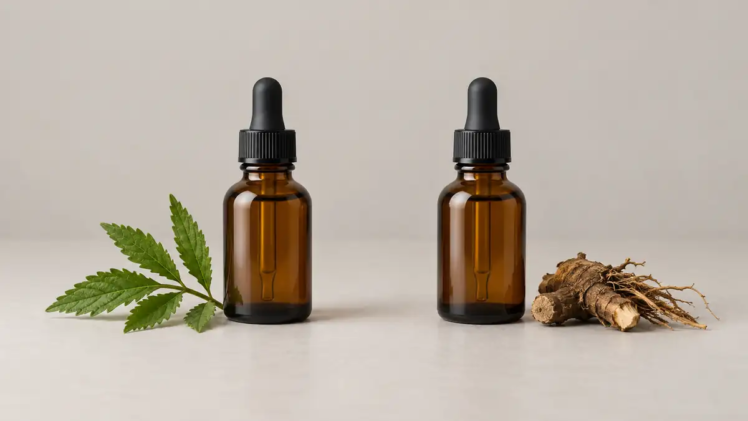
Bugleweed vs black cohosh can look like a choice between two supplements for the same stage of life. It is not. They come from different plants, appear in different traditional contexts, and have very different amounts of human research behind them. This guide shows which facts to check before comparing bottles. HerbEra’s “hormonal balance” wording is treated here as product positioning, not proof that bugleweed and black cohosh serve the same purpose.
The short answer: black cohosh has been studied in people for menopause-related symptoms, although findings depend on the preparation and are not a promise for any retail product. Bugleweed has much less high-quality human research, and evidence about black cohosh cannot be applied to it. Neither name, by itself, tells you whether a supplement suits your circumstances.
Are bugleweed and black cohosh the same kind of herb?
No. Bugleweed usually refers to a plant in the Lycopus genus, which belongs to the mint family. Black cohosh is Actaea racemosa, also called Cimicifuga racemosa, in the buttercup family. Their shared appearance in “hormonal balance” shopping results reflects broad marketing language, not shared botanical identity.
| Comparison point | Bugleweed | Black cohosh |
| Botanical identity | Lycopus species; the exact species should be checked | Actaea racemosa, also named Cimicifuga racemosa |
| Plant family | Mint family, Lamiaceae | Buttercup family, Ranunculaceae |
| Plant part commonly used | Above-ground parts, such as leaves and stems | Root and rhizome |
| Common retail forms | Liquid extract and capsules | Capsules, tablets, and liquid extracts |
| Human evidence relevant to menopause | Not established by the sources reviewed for this comparison | Multiple human studies, with findings that vary across reviews and preparations |
| Key shopping caution | Confirm the species and review thyroid-related considerations | Confirm the species and review liver-related cautions |
Plant part matters because a root extract and an extract of leaves and stems are different materials. Even within one botanical name, the solvent, extraction process, and amount per serving can vary. A shared word on the front of two packages cannot make those preparations equivalent.
Why do both products appear in “hormonal balance” searches?
“Hormonal balance” is a broad marketing phrase, not a precise description of a botanical ingredient or a measurable result. A shopper might encounter black cohosh while researching midlife changes and bugleweed while reading about traditional thyroid-related herbal use. Search results can place them side by side without explaining that these are separate contexts.
Different traditional contexts
Black cohosh has a long history of use and is now commonly marketed to people navigating menopause. Bugleweed has a different traditional profile centered on Lycopus preparations. Traditional use can explain why an herb appears in a product category, but it cannot establish what a particular bottle will do.
Different meanings of “hormonal”
The word “hormonal” may refer to many unrelated processes. It does not identify which hormone, measurement, life stage, or outcome a seller has in mind. Before interpreting a label, ask what the company actually states and what evidence applies to that exact botanical and preparation.
This distinction is especially important when a product page uses general wellness language. A claim about supporting balance does not turn bugleweed into a black cohosh alternative. It also does not show that either product changes a hormone level in a predictable way.
What does the human research say about each herb?
Black cohosh has substantially more human research related to menopause than bugleweed. That difference tells you where researchers have focused, not which bottle to buy or what result to expect. Studies may use extracts that differ from products sold online.
Black cohosh research
The National Center for Complementary and Integrative Health reports that a 2023 review examined 22 studies of products containing black cohosh extracts, alone or with other herbs. The review found potential benefit for overall menopause symptoms and reported improvement in hot flashes in the symptom-specific data. Other studies and reviews have reached less favorable conclusions. The evidence is therefore more developed than it is for bugleweed, but it is not uniform.
Preparation details limit how far a result can travel. Researchers may study a particular root or rhizome extract, a specific solvent, and a defined amount. A tincture with no matching specifications should not inherit the findings of a tablet used in a study. A combination formula adds another complication because its results cannot automatically be assigned to black cohosh alone.
Bugleweed research
A Southern Cross University botanical monograph notes a lack of high-quality clinical trials on the safety and effects of Lycopus. Its discussion centers on historical and thyroid-related research, not evidence that bugleweed produces menopause-related outcomes. The broader term Lycopus spp. also leaves the exact species open, so a study of one species should not be assumed to describe every product in the genus.
Neither evidence picture supports a general claim that an herb “balances hormones.” A useful comparison names the plant, preparation, and outcome instead of relying on that umbrella phrase.
What should each product label reveal?
A useful label identifies the botanical, plant part, extract format, and amount per serving. It should also let you review other ingredients and warnings. If those details are missing from the product page, inspect the package or ask the seller before making a comparison.
For a bugleweed tincture labeled Lycopus spp., the genus is stated but the species is not. HerbEra’s product page uses that genus-level name. Our editorial stance is to regard it as a starting point for an identity question, not to silently replace it with a specific Lycopus species or infer a clinical effect from the label.
Botanical name and plant part
Look for Actaea racemosa or its synonym Cimicifuga racemosa on a black cohosh product. Check that the listed material is root or rhizome. For bugleweed, look beyond the common name and ask which Lycopus species and plant parts were extracted. Common names can overlap with unrelated plants.
Extract and serving details
A drop count describes a serving instruction, not the amount of herb or a comparable amount of active compounds. A capsule’s milligrams also need context: are they milligrams of dried plant, native extract, or a blend? If a label lists an extract ratio or a standardized constituent, read the definition supplied by the manufacturer. A larger number alone does not establish a better product.
Quality documentation
If a seller offers a certificate of analysis, check that its lot number matches the product being sold and that it identifies the tests performed. Identity testing, contaminant screening, and constituent measurement answer different questions. A passing document supports the specific results shown; it does not establish suitability for every person or reproduce a clinical study.
Which safety differences matter before choosing?
The cautions are not interchangeable. Bugleweed warrants particular care for anyone with thyroid-related concerns or who uses thyroid medication. Black cohosh carries a distinct liver-related safety signal. Pregnancy, breastfeeding, other supplements, and medicines also matter for both choices.
The cited bugleweed product page says not to use its tincture during pregnancy or lactation and advises people with medical conditions or medications to consult a doctor. Southern Cross University also flags thyroid-related cautions for Lycopus. These warnings deserve attention even though they do not establish that every bugleweed preparation has the same effects.
NCCIH reports rare cases of liver damage in people taking products labeled as black cohosh. It remains uncertain whether black cohosh itself caused those cases, and some marketed products have contained the wrong herb or undisclosed mixtures. That uncertainty is not a reason to dismiss the warning. People with liver concerns should discuss black cohosh with a qualified clinician. Anyone who develops signs such as dark urine or yellowing of the skin or eyes while using a product should stop using it and seek medical advice.
NCCIH also says black cohosh may not be safe during pregnancy or breastfeeding, and its safety for people with a history of hormone-sensitive conditions is uncertain. If you already use medicines or other supplements, bring the complete ingredient list to a clinician or pharmacist. Do not assume that choosing two single-herb bottles makes combining them straightforward.
A practical pre-purchase checklist
Use this checklist to compare what a seller discloses, not to select a personal regimen. A clear label can narrow your questions, while missing details are a reason to pause and ask.
Confirm the Latin name
Find the full species name, not just a common name. If the label gives only a genus, ask which species the batch contains.
Check the plant part
Look for above-ground material on a bugleweed label and root or rhizome on a black cohosh label. Ask for clarification if the part is omitted.
Read the extract description
Record whether the product is a tincture, dry extract, or powdered herb. Check the stated solvent and extract ratio when available.
Compare amounts on the same basis
Note the serving size and the amount of botanical material or extract per serving. Do not equate drops with milligrams without product-specific information.
Review every warning
Read cautions about pregnancy, breastfeeding, existing conditions, and medicines. Consider whether the label addresses questions relevant to you.
Ask what was tested
Request lot-specific quality information if identity or purity claims influence your choice. Check the sample, test date, laboratory, and reported result.
Discuss uncertain fit
If your question involves thyroid health, liver health, a hormone-sensitive history, or medication use, discuss the exact product with a qualified clinician or pharmacist before use.
FAQ
Is bugleweed the same plant as black cohosh?
No. Bugleweed refers to Lycopus plants in the mint family. Black cohosh is Actaea racemosa in the buttercup family.
Can I substitute bugleweed for black cohosh?
Do not assume so. They have different botanical identities, traditional contexts, research histories, and cautions.
Has bugleweed been studied for hot flashes?
The sources reviewed here do not establish human evidence for bugleweed on that outcome. Black cohosh findings cannot be transferred to bugleweed.
Does black cohosh have stronger evidence?
It has more human research related to menopause. That does not establish a reliable result for every black cohosh product.
Does “hormonal balance” name a measurable product standard?
No. It is a broad phrase. Check the botanical identity, preparation, stated purpose, and evidence behind a specific product.
Why does “Lycopus spp.” need a follow-up question?
It names a genus rather than one species. Ask which species the manufacturer used if exact botanical identity matters to your comparison.
Is a quality certificate proof that an herb works?
No. It reports the tests and results shown for a sample or lot. It does not establish a clinical outcome.
Glossary
Botanical name
The scientific name used to identify a plant more precisely than a common name.
Genus
A group of related species. Lycopus is a genus, not a single species.
Species
A more specific botanical identity, usually shown by two Latin words.
Aerial parts
The above-ground portions of a plant, such as leaves and stems.
Rhizome
An underground stem. It is commonly listed alongside black cohosh root.
Tincture
A liquid botanical preparation made using a stated extraction solvent.
Extract ratio
A description of the relationship between starting plant material and resulting extract, which needs context to interpret.
Certificate of analysis
A document reporting specified test results for a material or product sample.
Conclusion
Bugleweed and black cohosh are different botanicals, not two names for one “hormonal balance” option. Compare their exact identities and labels, respect their different safety cautions, and discuss any personal health considerations with a qualified professional.
Sources Used
Black cohosh research, botanical identity, and safety overview – nccih.nih.gov/health/black-cohosh
Black cohosh preparations and label considerations – ods.od.nih.gov/factsheets/Blackcohosh-HealthProfessional
Bugleweed plant parts, evidence limits, and cautions – scu.edu.au/analytical-research-laboratory—arl/medicinal-plant-garden/medicinal-plant-monographs/lycopus-virginicus
Botanical naming and supplement quality basics – ods.od.nih.gov/factsheets/BotanicalBackground-Consumer